by senditrising
Share
Share
Rear-end crashes are common on Nevada roads. Most drivers assume the one in back is always at fault. Often, that is true. Failing to leave enough space or braking too late usually signals negligence. But the law in Nevada takes a deeper look.
Fault is not automatic in every case. Some accidents involve actions by the front driver that may shift blame. If a rear-end crash involved you, the outcome depends on more than assumptions.
This blog shows you how to determine fault in rear-end collisions. We explain how Nevada’s comparative negligence system works and cover real-life situations where fault may be shared. Understanding these laws can help you protect your rights after a crash.
Understanding Fault and Comparative Negligence in Nevada
Nevada follows a modified comparative negligence rule. The court can assign fault to both drivers. If you hold 50 percent or less of the blame, you can still recover compensation. However, the court will reduce your award based on your share of fault.
This system plays a key role when rear-end collisions involve an unclear fault.
Here are examples where the driver in front may carry some or all of the responsibility:
- Stopping suddenly without reason in traffic
- Driving with broken or missing brake lights
- Reversing unexpectedly at a stop sign or red light
Investigators look closely at what happened. Dashcams, police reports, road conditions, and witness accounts all play a role. These details guide how investigators assign fault.
Even if your case seems simple, the law requires evidence. Each party’s actions must be reviewed in context. If you are unsure how this applies to your situation, knowing the basics of Nevada law is a good place to start.
Common Exceptions in Rear-End Collision Cases
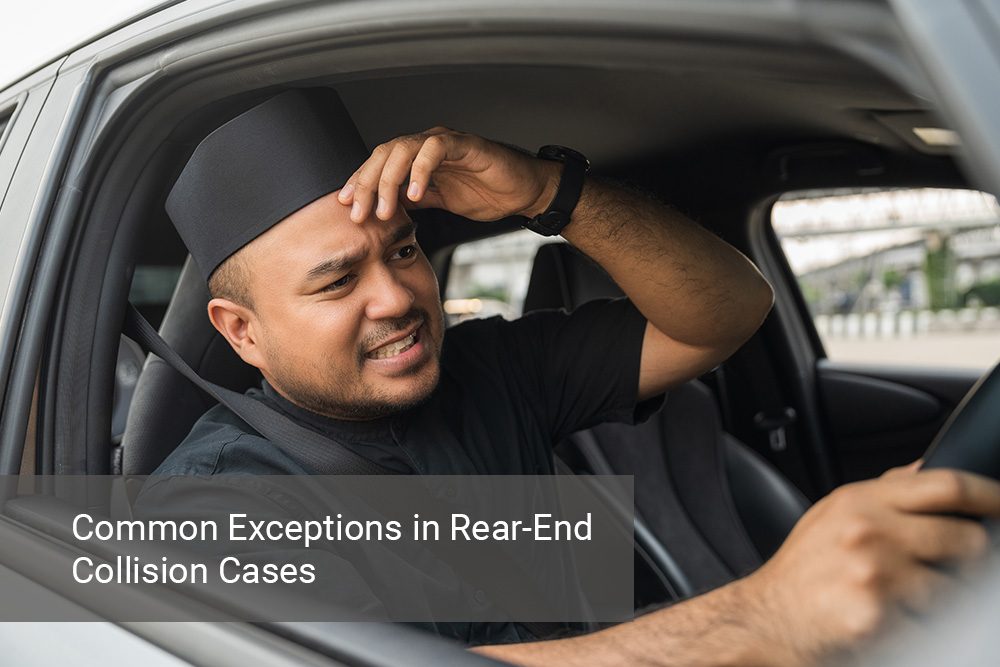
Rear-end accidents may appear simple, but real-life situations are rarely black and white. Nevada law recognizes that not every rear driver is automatically at fault. Here are some common exceptions that could shift or share liability:
- Sudden, unsafe stops: If the front driver brakes hard without cause in moving traffic, they may be considered negligent.
- Brake light failure: When the lead car has non-functioning or missing brake lights, the rear driver may not have had a proper warning.
- Unexpected reversing: If a car in front reverses into another vehicle at an intersection or stoplight, the fault may lie entirely with them.
- Cutting into lanes: A driver who suddenly changes lanes without signaling and gets rear-ended might carry most of the blame.
- Road rage or brake-checking: If a lead driver slams on the brakes out of anger or to intimidate, it may be treated as intentional endangerment.
In all of these situations, fault is not automatic. Insurance companies and legal teams will want clear documentation. That is why evidence like dashcam videos, witness statements, and police reports can strongly support your case.
If a rear-end crash involved you and you believe the front driver acted recklessly or negligently, you may have a strong legal case. A detailed investigation can uncover facts that shift the outcome in your favor. You can explore the types of cases where this applies by reviewing Moss Berg’s practice areas.
Why You Should Not Assume Liability Without Legal Advice
After a rear-end accident, it is natural to think the trailing driver is at fault. Many people accept blame at the scene or speak to insurance adjusters without knowing the full picture. This can hurt your case later.
Nevada’s comparative negligence laws help you when someone wrongly blames you. Even if you share some of the fault, you may still qualify for compensation. But proving that takes more than your word. It requires timely evidence and legal insight. Take a look at past results to see how complex cases have been resolved.
That is why speaking to a personal injury attorney early on is so important. A lawyer can review the facts, protect your rights, and help you avoid unfair blame. You do not have to navigate this alone, and a quick decision can make a big difference in how your case turns out. If you are still exploring your options, you can also read the blog for more insights.
Why Injured Drivers Trust Moss Berg Injury Lawyers
At Moss Berg Injury Lawyers, we work hard to protect people who have been hurt in rear-end collisions and other types of accidents across Nevada. We know these situations are rarely simple. Fault is not always obvious, and insurance companies often try to shift blame unfairly. That is where we come in.
Our team brings experience, focus, and a strong legal strategy to every case. We look at the facts, challenge assumptions, and fight for the compensation you deserve. Whether you are recovering from physical injuries or dealing with vehicle damage, we know how to push back against lowball offers and one-sided investigations.
We invite you to meet our attorneys and learn how we approach cases like yours with confidence and care. Our track record speaks for itself. We have earned strong results across a wide range of practice areas, and we continue to help Nevadans stand up for their rights. Just take a look at our client testimonials to see how past clients describe their experience with our team.
Let Us Help You Move Forward After a Rear-End Collision
You deserve answers after a rear-end crash. You also deserve a legal team that takes your case seriously. At Moss Berg Injury Lawyers, we help you understand what happened, identify who is truly at fault, and take steps to protect your future.
We will take the time to listen to your story, gather the right evidence, and build a case that puts your needs first. Our goal is to make the legal process as clear and stress-free as possible. If you have questions or are ready to begin, contact our office today. We are here to guide you every step of the way.
Rear-end accidents can be complex, but getting help does not have to be. Let us stand with you and fight for the outcome you deserve.